January 6, 2012

John Brown

John Brown
Bob Dylan
pages 916-917


The main argument in Bob Dylan's work John Brown is that war that too many soldiers go into war not aware of exactly what they're getting themselves into. More specifically, he is saying that soldiers don't deserve to face everything they do in war because of the consequences that can come from it. He writes, "'Oh I thought when I was there, God, what am I doing here? I'm a-tryin' to kill somebody or die tryin'. But the thing that scared me most was when my enemy came close and I saw that his face looked just like mine.' Oh! Lord! Just like mine!" (page 917) Here he's talking about the emotional and mental trauma that soldiers suffer on the battlefield. In conclusion, it is Dylan's belief that soldiers suffer too much from war.

I think that Dylan is right but I also believe that soldiers should know what they're getting into when they go to war and that the training they go through is a good preparation for them. For example, camp and training in the military can be excruciating and hard but it prepares the men and women who go to fight both physically and mentally for what they may face. Though others may argue that the training soldiers go through is too hard, I maintain that is necessary to prepare them. In conclusion, I believe that Dylan is right in saying soldiers face trauma and stress while in war that comes home with them.

Masters of War

Masters of War
Bob Dylan
page 916


The main argument that Bob Dylan is making in his work Masters of War is that the people most responsible for the deaths of others in war isn't soldiers but rather the companies and government leaders who produce the means and approve it. More specifically, he is saying that the rich powerful men are the ones who really lead the war. He writes, "Come you masters of war you that build all the guns you that build the death planes you that build the big bombs you that hide behind the walls you that hide behind desks I just want you to know I can see through your masks" (page 916) Here, Dylan is addressing the CEOs and men who work for the companies that build the weapons of war, saying that he knows they are responsible but they still just hide, away from the real fight. Therefore, it is Dylan's belief that the men responsible for death in war are the people who provide the weapons used in it.

I think that Dylan is right. The men who work for all the companies producing the weapons in war are just as responsible as those actually out fighting. For example, the people of these businesses just get to sit back and make money while their tools are being used somewhere else in the world to cause violence and take peoples lives. In conclusion I agree with Dylan. I don't think it's right for these people to make a profit off of others losing their lives.

With God on Our Side

With God on Our Side
Bob Dylan
pages 915-916


The main argument in Bob Dylan's work With God on Our Side is that people believe God or the higher power they believe will take their side in a war which causes people to rationalize the morality of the conflict. More specifically, Dylan is saying that people will believe they are right in a war because God will take their side. He writes, "When the Second World War came to an end we forgave the Germans and we were friends though they murdered six million in the ovens they fried the Germans too have God on their side." (page 915) He is saying here that God will not take sides in a fight and that believing he will makes actions in war even more terrible. In conclusion, it is Dylan's belief that believing God will take a side in a war is not the way to rationalize the morals of a particular decision.

In my opinion, Dylan is right. However, I think it is okay for people to believe in the power of God to protect soldiers, but I don't think God would take a side and help a particular group of people win. For example, most religions that believe in God believe that we are all here on Earth as His children. I don't believe that He would choose one group of His children to help kill another. Therefore, I agree with Dylan's belief that using God as rationalization for war is not right.

January 5, 2012

Final Essay

Final Essay

Today, equality and diversity in race, gender, and social class seem to be two things that society makes important when comparing others, but many old traditions and stereotypes prevent them from actually occurring. Two works that support this argument are My Two Lives by Jhumpa Lahiri (pg. 672) and Facts About 1930s (pg. 732). Equality is often dismissed today because of old stereotypes in gender, race, and social standing assumptions.

My Two Lives is Jhumpa Lahiri’s personal account of what it is like to be raised in more than one culture and be expected to adhere to traditions of both. The general point made by Lahiri in her work My Two Lives is that today, many people who are multicultural are expected to live in one culture or another but that they should be able to in both. More specifically, Lahiri is saying that people of more than one ethnic or cultural background shouldn’t be pressured to choose one over the other. She writes, “While I am American by virtue of the fact that I was raised in this country, I am Indian thanks to the efforts of two individuals.” (pg 673) In this passage, Lahiri is explaining that she is American because of where she lives and what she believes but that she is Indian because of traditions she was raised in. In conclusion, it is Lahiri’s belief that people should be able to practice traditions of more than one culture.


I believe that Lahiri is right because people ought to be able to practice any traditions that mean something to them. Nobody should tell people how to live. For example, there are many cultural groups that promote learning about others’ traditions and tying them to American life. Although Lahiri might object that many people aren’t open to learning new traditions or accepting things they aren’t used to, I maintain that people should be able to practice more than one culture’s traditions. Therefore, I conclude that Lahiri’s is right in saying that it is good to practice many cultural traditions.


I related to Lahiri’s work because my family celebrates American traditions as well as a lot of Dutch traditions because my dad is Dutch. We especially practice a lot of Dutch traditions around this holiday season. For example, December 6th is the holiday of Sinterklaas in the Netherlands. This is a lot like Christmas in America. Sinterklaas (Santa Claus) comes on his horse and leaves presents in the wooden clogs of the good kids but will leave a bundle of sticks for those who were bad.


Facts About 1930s is a list of 16 facts that describe what American life was like in the 1930s. It compares what life was like then to how life is now and what more is happening, returning America to a depressive state. The general made in the work Facts About 1930s is that America is continually driving itself back to what it was like during the Great Depression era of the late 1920s and the 1930s. More specifically, the work lists points that argue America is headed back into the economical and financial state it was in in the 1930s. One fact the work lists is, “At the beginning top 1% of the population controlled 44% of all wealth [today it is once again over 40%]” (pg. 732). In this passage, it shows that, again, 1% of the country’s population controls nearly 50% of the wealth, comparing today to the 1930s. In conclusion, the main argument in Facts About 1930s is that America is heading down the same path that took it into the Great Depression.


In my opinion, the argument in Facts About 1930s is right because America is headed towards more economical collapse. For example, 1% of our country now controls nearly 50% of the money, just like what was going on in the 1930s. This is why many citizens of the country have joined in the “Occupy” movement which protests the power of the 1% who control so much for the other 90%. Although some may argue that America is better off in many ways than it was in the 1930s, I maintain that it is headed down a bad road. Therefore, I conclude that if things don’t change in the country, things will end up just like they did, or worse, during the 1930s.

I connected to Facts About 1930s through the Occupy Protest movement and issues that has been influencing our country lately. The facts about the unemployment and wealth rates in the 1930s made me think about theses problems that are back, today.


Others argue that everyone is equal nowadays and that there is no form of inequality in the United States when it comes to gender, ethnic and racial background, or one’s standing in the American social classes. The Melting Pot by Dudley Randall (pg. 602) argues that people are now seen completely equal in America. He says, “There is a magic melting pot where any girl or man can step in Czech or Greek or Scot, step out American.” (pg. 602).


The theme of equality or diversity can relate to the theme of freedom and responsibility. In the freedom and responsibility section is the passage Civilian Exclusion Order No. 5 which is the order that was made after the attack on Pearl Harbor instructing all people of Japanese descent living in California to leave their homes and report to Assembly Centers. This relates to the theme of equality because these people of Japanese descent were not being seen as equals, they were seen as lesser than other American’s because of the actions the Japanese took in attacking Pearl Harbor.


Another medium that I really connected to that has to do with this theme was the Two Lives Intertwined painting by Julie Lueders. The painting consists of three trees, two trees on either side of one in the middle. The tree on the left side has a blue, cold, background and the tree on the right side has a red, warm, background. However, in the middle where these two trees meet with the third tree are many colors like red, green, blue, orange, and yellow. This shows that the two trees that are different can meet in the middle and intertwine, becoming equal to one another.


EXTRA VISUAL:


The sculpture “Demand Management” by Olga Koumoundrouros uses everyday items covered in newspaper pieces from various states and cities to symbolize to chaos of the country. Koumoundrouros designed the sculpture to be a pie chart representing the 1% of the country which, when the piece was made in 2009, controlled 34% of the nation’s wealth.

When You See Millions of the Mouthless Dead

When You See Millions of the Mouthless Dead
Charles Hamilton Sorley
page 849


The main argument in Charles Hamilton Sorley's work When You See Millions of the Mouthless Dead is that dying is not something to be honored or to be memorialized. More specifically, he argues that death is something to get over quickly and that the only way to do so is accept the fact that people die. He writes, "Nor honour. It is easy to be dead. Say only this, 'They are dead.'" (page 849) Here he is saying that we shouldn't honor the dead because it is not an honorable task, being dead. In conclusion, it is Sorley's belief that death is not honorable and should simply be a typical part of life.

In my opinion, Sorley is wrong in his belief that death cannot be honorable. I think that it is appropriate at the time of one's death to remember that person and to grieve for the loss of their spirit in another's life. For example, I have had many experiences with the losing of loved ones. I've lost many close family members and friends and know many other people who have passed away as well. Most recently, I lost two good friends, two uncles, and a cousin. I have attended 6 funerals within the last year ears. At each, there were people grieving and mourning the loss of their loved ones, and rightfully so. When people close to us leave us, a part of us leaves as well. In conclusion, I think Sorley is wrong to say that death is simply death and that people should be able to grieve over lost loved ones.

The Charge of the Light Brigade

The Charge of the Light Brigade
Alfred, Lord Tennyson
pages 837-838


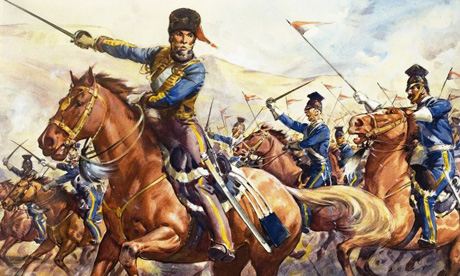
The main point in Alfred, Lord Tennyson's work The Charge of the Light Brigade is that soldiers have a duty to their commander to follow him wherever he takes them, even if it means death. He says, "Then they rode back, but not the six hundred." (page 838) He he is talking about all that is left of the original six hundred soldiers of the brigade. He goes on, "When can their glory fade? O the wild charge they made! All the world wonder'd. Honour the charge they made! Honour the Light Brigade, noble six hundred!" (page 838) All six hundred of the men died, and that is when they received their honor. In conclusion, it is Tennyson's point that soldiers need to follow their commander as their duty, even to their death.

In my view, Tennyson is right. It is a soldiers duty to follow their commanding officer in what he instructs them to do, even if it is to go into battle knowing they will die. People sign up knowing what will be expected of them and it is their responsibility as soldiers to do that. In conclusion, I think that Tennyson is correct in his belief that soldiers are responsible to follow their commander is right.

I Would Not Say Anything for a Man

I Would Not Say Anything for a Man
Tyrtaeus
page 818


The man argument made by Tyrtaeus in his work I Would Not Say Anything for a Man is that battle and war are not all about just earning respect and being honored. It's about more. More specifically, he argues that war isn't where a man earns respect just for going to war, you earn it after you've fully served. He says, "For no man ever proves himself a good man in war unless he can endure to face the blood and slaughter, go close against the enemy and fight with his hands." (page 818) He is saying that it takes more than only being willing to fight and enter battle but that a man never proves himself until he actually acts on that and faces his enemies face on. In conclusion, it is Tyrtaeus' belief that men do not prove themselves by going to war, respect and honor are earned.

I think that Tyrtaeus' point is correct. War isn't a place where men go out in self-righteousness and earn respect. In fact, I think it's the opposite. I think the way someone earns respect through war is by humbling themselves enough that they would really be willing to do anything for the values they're fighting for, including sacrificing their lives. For example, in November of 2009, I lost a good friend Aaron Nemelka who had just recently become a Private First Class in the Army and was ready to be scheduled for tour in Iraq on a bomb-difusing squad before he was murdered in the Fort Hood Shooting in Texas. He never went to battle, but he still died serving his country and he is one of the people I respect most. The visual I used for this post is Pfc. Nemelka's casket being carried by a US Army Honor Guard at his funeral. I think that the willingness and humility with going to war is what earns respect and honor, not the masculinity of taking lives on a battle field.

On Glory in Warfare

On Glory in Warfare
Callinus
page 817


The main argument made by Callinus in his work On Glory in Warfare is that men should be honored for fighting in war as well as feel honor for serving. More specifically, he argues that war is more than just a gruesome fight or battle but that it is a way for men to show courage and honor to it. He writes, "How long will you live idle, and when will you find some courage, you young men?" (page 817) He is saying that it is an honor for young men to fight and it shows courage. In conclusion, it is Callinus' belief that war is the best thing a young man can do to show courage.

I agree with Callinus in his argument that by serving in battle, men and now women show courage and deserve respect. For example, I think it's terrible how many groups in our country protest the war by targeting the troops. These men and women deserve as much respect as we can give them as citizens of the country the are fighting for. In conclusion, I think the Callinus' argument that war shows courage is right.

What a Billionaire Should Give-- and What Should You?

What a Billionaire Should Give-- and What Should You?
Peter Singer
pages 804-811


The general argument made by Peter Singer in his work What a Billionaire Should Give-- and What Should You? is that helping other people and being charitable is a much better quality and is a responsibility that humans have to one another. More specifically, he is saying that while everyone can't donate $6 billion to charities, everyone has a part to play when it comes to helping their fellow man. He writes, "Why are people who are giving doing so? Does it do any good? Should we praise them for giving so much or criticize them for not giving still more? Is it troubling that such momentous decisions are made by a few extremely wealthy individuals? And how do our judgments about them reflect on our own way of living?" (page 805) Here, he is basically saying that while there is a very small percentage of people who do way more than others, they shouldn't be respected or criticized anymore than the average Joe. Everyone has the responsibility to give back, it's just that some can more than others.

In my opinion Singer is definitely right. It's everybody's responsibility to help others in any way that they can, whether it is that you're a billionaire and can give away millions at a time or whether it is that you're a student at school and you help by accepting everyone in the halls, not just your friends. For example, giving to charity is a fantastic way to help but not everyone can. Giving back can be as simple as volunteering for a few hours somewhere in your community. In conclusion, I agree that everyone should give back and society shouldn't just rely on the wealthy to help the poor.

That Damned Fence

That Damned Fence
Anonymous
page 745


The work That Damned Fence is all about the fences in the internment camps and how they shut the Japanese-American people in them from all the outside life. It talks about how everyday they longed to be out and their loyalty and sacrifice made in patriotism by staying in the camps. It says, "But we're here because we happen to be Japs. We love life, and our country best, our misfortune to be here in the west, to keep us penned behind that DAMNED FENCE, is someone's notion of NATIONAL DEFENSE!" (page 745) Here it states that those in the camps could have been doing something more to help with the country like serving in the military, sacrificing their lives but rather, they were forced to be penned in not doing anything based on the notion of the country's security.

I think that this poem really showed how a lot of the people in the camps probably felt. That they could be actually doing something to help but because they were behind the fence, they couldn't. They saw it as denial and disassociation from everybody else simply because of the ethnicity they happened to be. If the country would have looked past that, I think things could have resolved a lot quicker and the Nation would be less scared by its racial biassed past, today.

To the Lady

To the Lady
Mitsuye Yamada
page 744


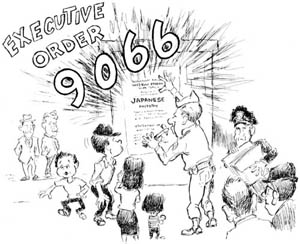
The main point made by Mitsuye Yamada in her work To the Lady is that in America, things of serious matter are often over looked when the victims are minorities. More specifically, she argues that too many people, including the Japanese-Americans, did nothing to stop the internment of all those people during World War II. She writes, "But we didn't draw the line anywhere law and order Executive Order 9066 social order moral order internal order. You let'm I let'm All are punished." (page 744) Here, she is saying that it wasn't one person or groups responsibility to speak up, it was everyones and everyone has suffered for it. In conclusion, it is Yamada's belief that too many people went on with their lives, over looking the internment of so many Japanese-Americans.

In my opinion, Yamada is right. It wasn't just the responsibility of the Japanese-Americans to resist the internment camps, every American should have. For example, she wrote "written six million enraged letters to Congress" (page 744) This is referring to every American at the time. Also, she referenced Kitty Genovese who was stabbed to death in her own home while 38 people walked by and heard the commotion but did nothing. In conclusion, Yamada is right. If no one says anything, everyone suffers.

Citizen 13660

Citizen 13660
Miné Okubo
pages 748-759


The main argument that Miné Okubo suggests in her work Citizen is that the internment camps of World War II were terrible places to live and that the Japanese-Americans sent to live their didn't deserve those conditions or that treatment. She writes, "Moreover, it was very cold and we were shivering. One blanket was not enough to keep us warm." (page 752) Here, she is showing how the people in the camps weren't given enough things to keep them comfortable, only the ones who were lucky enough to have brought their own things with them to compensate were able to sleep the night in the cold. In conclusion, it is Okubo's point that the people in the Japanese Internment camps were not treated fairly and shouldn't have had to endure those conditions.

I think that Okubo was right. Many of the camps were in locations that were very unpleasant. For example, Topaz was in central Utah which isn't too bad except it's a desert and the camp buildings were low-ceilinged with no air conditioning causing them to be hot at all hours of the day. I agree that the conditions the people had to live in in the camps were unfair and they shouldn't have had to.

Kenji

Kenji
Fort Minor (Mike Shinoda)
pages 746-747

The main point that Mike Shinoda makes in his work Kenji is the discussion of all the hardships faced by the Japanese-American people who were forced to live in the Japanese Internment camps of World War II. More specifically, Shinoda makes clear everything they endured in and out of the camps they were sent to. At one point, he writes, "Just like he guessed, the President said, 'The evil Japanese in our home country will be locked away,'" (page 746) Here, Ken, the man the song is about, saw the headlines in the news about World War II and knew what it would lead to, the conclusion of all Japanese being involved and they're sentences to the internment camps. In conclusion, it was Shinoda's main point that the American-Japanese faced a lot because of Pearl Harbor and the country responded too strongly.

In my view, Shinoda is right and he expressed his point in a perfect way. I think that too many Americans and government officials reacted too strongly regarding the situation and the decision to implement the internment camps. For example, he talks about how he had "To get his life packed in two bags, Just two bags, couldn't even pack his clothes," (page 746) and how many of the others didn't even have anything to take what they needed with them. In conclusion, I agree with Shinoda that the internment camps of World War II were something very hard on the Japanese-Americans who had to endure them.

In Response to Executive Order No. 9066

In Response to Executive Order No. 9066:
All Americans of Japanese Descent Must Report to Relocation Centers
Dwight Okita
page 743


The general argument made by Dwight Okita in his work In Response to Executive Order 9066 is that too many Americans were treated unfairly by the actions of the Japanese on Pearl Harbor. More specifically, he argues that it was wrong for all the Japanese-Americans to have to relocate to the internment camps. He writes, "If it helps any, I will tell you I have always felt funny using chopsticks and my favorite food is hot dogs" (page 743) In this passage, he is showing just how American these people really were. He also says "She was sitting on the other side of the room. 'You're trying to start a war,' she said, 'giving secrets away to the Enemy, Why can't you keep your big mouth shut?' I didn't know what to say." (page 743) Here, he shows the harsh and irrational conclusions that many other Americans made about people with Japanese descent and how they were unfair. Further more, Okita is suggesting that it was unfair and wrong of all those innocent people to lose so much of their lives, if they lived through the internment camps, and that the government and other citizens of the United States were in the wrong.

In my opinion, I think that Okita is partially correct in what he was saying, it was wrong of these people to be forced out of their homes and to leave to such unpleasant places. However, you have to look at the otherside. For example, the government didn't know who the Japanese spies in the country were so they had to make a generalization to prevent further attacks. Also, the camps were somewhat for the Japanese-American's own safety. If they had stayed in their own homes, I think that far further violent and horrible things could have happened to them from unhappy and racist Americans going for the innocent in response of the guilty's actions. In conclusion, I agree that it was wrong for these people to be forced to be put in the camps but that the government can't also be blamed and held fully accountable for the action.

My Personal Ad


Hi! My name is Tate, I'm 18 years old am a senior in high school. I really love to create art and do things that require imagination and creativity. I love to draw and sketch, design architecture, listen to music, and be with my friends just having a good time. My favorite thing to do when I have some downtime is doodle on a piece of scratch paper or make up raps in my head. I would consider myself to be fairly social when meeting new people but like to be introduced by or with other people I already know. Overall, though, I'm friendly and will try to make conversation with anyone.

Favorite Poem Project: Freedom and Responsibility

Kenji
Fort Minor (Mike Shinoda)
pages 746-747


Author: Mike Shinoda, For Minor, is an American musician from California. His music includes songs and raps. He was born to a mother who was native to Europe and his father who is a Japanese-American. The song "Kenji" is about his family and their experiences in the Internment Camps of World War II.

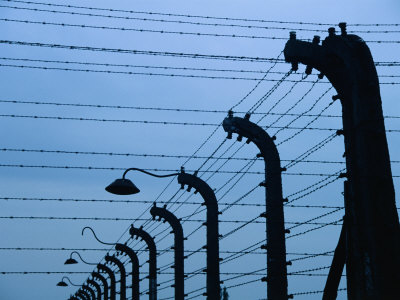
Response: "Kenji" was my favorite poem for Freedom and Responsibility because the meaning was clear, it hard a connection to modern society through the style, and because of the point it was bringing. I can really relate to what Shinoda was saying about his family because my dad's parents were both Nederland-natives who were raised through and lived through the Nazi terror that went on in Holland. My grandma, who we called "Oma" which is grandmother in Dutch, had two brothers who were sent to work camps but escaped and had to be hidden. To fight the Nazi's, she and her family even helped other families and political refugees they knew by giving them their ration tickets and even hiding them in their home with her brothers. One story that really gets me is something that happened to my grandma. One day when she was in her early 20s, she was biking to get some groceries and was stopped by a group of German soldiers and told to come to where she saw another crowd of people. In front of the crowd was a covered truck. Out of the truck, soldiers brought two men and a woman in blue coveralls with "Terrorist" painted onto them. One soldier addressed the crowd saying that "this is what will happen to anyone who tries to disrupt our German occupation" The people had been accused of working with the underground, who my Oma also worked with, and were sentenced to die by the Nazi's. My Oma was forced with this other group of people to watch these three people executed by taking a bullet to their heads. The part in the song with the recording of the woman talking about her "innocent neighbors" going to these camps reminded me of all the stories of the innocent people my family knew who became victims of the hateful actions of the Nazis.

January 3, 2012

Four Freedoms

Four Freedoms
Franklin D. Roosevelt
pages 737-739


The general argument made by Franklin D. Roosevelt in his work The Four Freedoms is that man has four natural freedoms and it is the responsibility of the United States to keep them alive. More specifically, the purpose of the United States should be to ensure these four freedoms to all men. He writes, “The first is freedom of speech and expression… The second is freedom of every person to worship God… The third is freedom from want…” and “The fourth is freedom from fear…” (page 739) Here, Roosevelt is listing exactly what the four freedoms every man has. In conclusion, it is Roosevelt’s belief that these four freedoms should be granted to every man.

In my opinion, Roosevelt is right in his belief that every man should be granted these four freedoms. For example, everybody should be able to worship in way that they see fit for themselves and their own wellbeing. Although Roosevelt may argue that some people’s ways of worship could be seen as strange or obscure ways towards other, this freedom should be granted to everyone, as long as it doesn’t conflict with other’s views either. However, I maintain that all men should be granted the four freedoms listed by Roosevelt.